Sunday, June 16, 2013

The Fault in Our Stars by John Green

How are character decisions affected by the situations they are put in, and how does that relate to decisions we make in everyday life?


The characters in the book “The Fault in Our Stars,” by John Green made many important decisions that not only helped the positions of their lives, but also the people surrounding them that they really cared for.  As the story progressed, and conflicts surfaced, the actions of all the different characters varied to benefit one another.  The three characters that changed their ways to love one another most were the main characters, Hazel and Augustus, but also Hazel’s mother.  
When Hazel met Augustus, he was cancer free, and all of his actions were done to support her through her cancer struggles, as she was on her way to dying.  The first thing I noticed was when he put a cigarette in his mouth, yet didn’t light it.  He said, “It’s a metaphor; see: You have the killing thing right between your teeth, but you don’t give it the power to do its killing.”  Augustus bases a lot of his actions on these metaphors, and because he once had cancer, he can know what it was like to be dying, and now be able to hold something to stop it.  This metaphor gave both him and Hazel the view of having control over their own lives, and that cancer didn’t have control over them.  Another thing that Augustus did was create a big picnic as a symbol leading up to giving his wish to her.  Since she had already used up her cancer wish, he used his to send her and himself to Amsterdam, fulfilling her wish; instead of his own.  That moment of the book carried a lot of significance for me because he, at that point in time, had know that he was having a recurrence of his cancer, and decided to continue to care for Hazel, and quit chemo.  His actions showed an unbelievable love that he shared with Hazel through their time together, even when he could have instead been helping himself.  The beauty of all his care through the beginning of the book is then reciprocated when Hazel spends the last weeks of Augustus’ life by his side, caring for him and his family before herself,  and her family.; showing him the love he had once shown her.
Another, more minor character, who showed unbelievable care for Hazel is her mother.  In the beginning of the book, her mother did everything for her, giving up her entire life just to show Hazel how much she cared.  Her mother was also the person who encouraged Hazel to join the cancer support group, where she met her new friends.  As I was reading I thought that she was just being an excellent mother, who was caring for her dying daughter, until reaching the end of the book.  The whole book, Hazel was worried that her mom would lose her life when she lost Hazel, but in the end Hazel and the readers find out that she had been taking classes to begin a new job once Hazel was dead, and had just hidden it from her so she wouldn’t feel replaced.  Her mom had unconditional love, which even extended to hiding an alternative future to protect Hazel’s feelings.  
  The characters in this story all had their own ways of showing love for each other, at different times. It really made me notice how, in our everyday lives, we care so much about what is happening to us, because we think we have a whole lifetime to care for those around us.  When the characters knew that they, and the ones they loved were dying, they all went above and beyond to show their love, which is something we, as humans, should be doing in our day to day lives.  It shouldn’t take a shortening of time left to live, to bring out love, but we should appreciate those around us daily, and let them know that we do.  
As Gus and Hazel share their love when they are in the worst parts of their lives, we as readers witness high points in their character, and they are more like us as humans.  Gus loves Hazel when she is the most sick, and Hazel reciprocates when it is Gus who is in the worst condition.  Hazel’s mother, however, is the character that we should be aspiring to be.  Loving no matter what.  As we grow everyday, we should show our feelings to each other, as Hazel’s mother did, rather than waiting until the end.  

Sunday, June 9, 2013

the Fault in Our Stars

While reading a fault in our stars I found myself at the verge of tears several times, and having only the last chapter left to read, I felt it would only be right I blog now, without knowing the ending, because Hazel never got her ending to an imperial affliction. This book touched me so much for one reason because it was just written beautifully and conveyed Hazel and Augustus's story so well, but also because it had a very advanced view on the endings of life, and showed a perspective very sophisticated on a subject which is usually cushioned and safetied. Hazel has a rough life, fighting many fights of cancer, but she still says that the pain of losing Gus defeated all other pains. This book showed a girl who truly loved, who truly cared, and who stuck with Augustus until the very last day. Her strength through Gus was unbelievable, and I aspire everyday to be more and more like her. There was so much to learn from her, and I love this book.

While reading, it got me thinking about how close death is, and what heaven actually could become for us. Some of my favorite quotes on the topic, and the comic relief this book provides through the dynamic characters are below:

Do you believe in heaven?
"Yes, absolutely. bit like heaven where you ride unicorns, play harps, and live in a mansion made of clouds. But yes. I believe in Something with a capital S. always have.

"'the risen sun too bright in her losing eyes.' That's God, I think, the riding sun, and the light is too bright and her eyes are losing but they aren't lost."

"If you don't live a life in service of a greater good, you've gotta at least due a death in service of a greater good."

I don't know what I fully believe yet, but like Augustus, I definitely believe in Something. Capital S.

Monday, May 27, 2013

Bunheads by Sophie Flack


The past few chapters have all showed me that when you really care for someone, you can wait through rough patches to convey your affection to them.  Hannah has a huge career that she's already living with insane hours and push to consistently improve.  Although it's good for her, she has no time for Jacob. He however, has stuck through it all, and is really pushing to get to know her, and be a part of her life even though she has very little time for him.

The most recent chapter showed me that all his care and waiting paid off, but he's now acting as sort of the "Woman as Temptress," even though he is a man.  Because of Hannah's care directed back at him, she has been canceling yoga and pilates classes, and slacking off on all of her workouts.  Hannah is losing solo opportunities  and what meant most to her in the world, her career, is being lost because of the care she has for this boy.

This book is showing me that when you love someone, show it, but love can also develop a negative affect on what you have, and usually, it's worth it.

Sunday, May 19, 2013

Bunheads by Sophie Flack

This week, while reading Bunheads by Sophie Flack, I noticed how opinions of those around us can change our decisions and mindsets by a lot, no matter how hard we try to block out their input.

This was shown really well through the chapter about Hannah's solo that she fills in on last minute, when the soloist gets hurt halfway through performance.  At first, while Hannah was dancing she was extremely nervous, but as she continued on through the steps, she seemed to embrace the character.  However, even though it seemed as though she was confident in herself with the role, it wasn't until she heard the praise of her friends after the show when she could finally relax.  Even if Hannah wanted to be proud of her movement alone, her friends put her into the mindset that she looked beautiful, and could continue proudly through that role.

Another example of this is when she has to chose between the college student/ guitarist Jacob, and frequent ballet audience member Matt.  Sometimes, friends can be really helpful when it comes to talking through relationships, but there are also times when you don't want to hear what your friends have to say, and follow your own heart.  Even if Hannah wanted to follow her heart, once you hear everyone else's opinions, there's no avoiding them, they are suddenly a part of your thinking process.  Her friends had views on both boys, and even though it should have been a decision coming from Hannah, each thing she heard from her friends had to play a role in her final decision, again showing influence.

Your peers are sometimes vital in decisions you make, but sometimes you may just want to think things through yourself.  This is shown throughout the book Bunhead within the character, Hannah's, life.

Sunday, May 12, 2013

Bunheads by Sophie Flack

This week, in continuing the book Bunheads, by Sophie Falck, I noticed that you can always find a new quality within yourself, that can only be brought out through the presence of others.  Through meeting Jacob, and having a relationship with someone outside of her dance school, Hannah discovers that she can have normal conversations, and feel comfortable around bos who are not dancers.  Through the most recent chapter, Hannah was nervous to be alone with him, so she invited him over along with her best friend, and as the night went on, her comfort zone was stretched, and she discovered some wonderful qualities, other than her dancing.  This showed me how, surrounding yourself with different people can be really good for you, and you can learn new things about yourself and your friends through experiencing new things.  Change can be good, and bring out the best in people.

This book, for the first few chapters was showing Hannah's routine, and how she lived her life as a dancer, and little by little throughout the following chapters, changes have been dropped on the reader.  As Hannah's life is changing, her character i developing, and it is showing me that routine can be good, but sometimes, change is necessary.

Sunday, May 5, 2013

Bunheads by Sophie Flack

I started the novel, Bunheads by Sophie Flack this weekend and the very first page had me intrigued.  The narration is done by a girl who does ballet, but hates the term "ballerina." This book is something I can relate to already through the very first sentence because, as a dancer, I also hate the stereotype given as perfect and pink.  As Hannah Ward, the main character, describes the life behind the scenes of ballet, I find it even more beautiful than the description of on-stage.  Beat up dance wear is what describes dancers who are dancing for themselves, and for strength rather than for the pleasures of an audience.

The first page is ended with a quote from one of Hannah's ballet teachers and it says, "Throw yourself into your dancing now, because the lifespan of a dancer can be as short as a fruit fly's." This can either be taken to the literal level of the fact that a dancing career lasts only as log as your prime, and can end extremely quickly as you lose your young-tallent, but I prefer looking at this quote in the less literal way.

To me this quote is showing that every class, every show, every second that we are dancing should be lived as your last, because each and every movement of your dancing should tall a story in itself, and show the inner beauty of the person delivering each movement.  Dance is an art, and can tell you more about a person than words, so each dance should be a person, and not a stereotype.  I'm excited to see where Bunheads goes, and how the author will portray this 19 year old ballet dancer's life.

Sunday, April 28, 2013

Stranger With My Face by Lois Duncan

This week the main character found out that she was adopted and had a twin sister.  Because of the way the plot unfolded, in that she found out for herself, it shows an underlying message of how important it is to tell the truth.  When Laurie realizes this information, it takes her interests away from the family, because when you keep a secret, there's always a reason you're keeping it.  Laurie uses this against her parents claiming that if they loved her equally as much as her siblings, they wouldn't struggle to tell her that she was adopted, because it wouldn't be something they would need to hide.  When someone finds out the truth without hearing it from you, it take the exact opposite effect of what keeping that secret was intended to do.

Telling the truth is really important because it saves relationships, even if at the time it hurts, it's worth it in the long run.  However, this book not only teaches how valuable the truth is in this section, it also shows that if there is true love present, like between Laurie and her family, it can overcome even the toughest situations.

Sunday, April 7, 2013

Stranger With My Face by Lois Duncan


"I felt the way you do when you are moving through a dream and the most impossible things are happening and you are accepting them as normal."


Sometimes things in your life come on as impossible or damagingly ridiculous in the sense that if you believe them, consequence after consequence would follow.  Sometimes these impossible things however, are what keep us living, moving, breathing.  Relating to Laurie, the main character, in this way of problems building up makes it refreshing to read this quote.  If life went on perfectly, normal would be boring, and there would be no trust in the world.  But being able to accept the impossible is how humans, or maybe just I, have learned to live. 

In Laurie's case, her impossible is literally impossible, what with her dead sister coming back into her life, but everyone has their own mini-impossible scenarios that continue to cause this harm, these consequences and problems in our lives. 

This line in this instance was super literal, but for me, it's poetic-ness stood out.  We accept what we want to believe, what we think we deserve.  I want to believe the impossible.

Sunday, March 17, 2013

Stranger With My Face by Lois Duncan

In this chapter that I just finished reading, a new character gets introduced to try and help her solve her "popularity" problem.  The book does a really good job trying to show the difficulties in, Jeff, the new character's life that brought him to point where he can hate just enough, yet still have the brilliant insight to provide Laurie, the main character, with an easy way out.

It is interesting to see the relationship between the two of them, almost an unspoken understanding, yet you can tell they never hang out.  It's at a point where she was never good enough for him when he was popular, but now, with his half burnt face you can tell she's trying to understand him.

The way their conversation is conducted makes it seem very formal and non-judging, but you can tell that both characters are in fact judging one another.  It is also relevant that they both require something from one another, and are talking to each other solely for that purpose.  I believe that Laurie gets what she wants, or more likely, needs, however I think that Jeff is still longing for more.

This chapter really shows build of plot through these two characters, and is a great lead into the rest of the conflict of the story.

Sunday, March 10, 2013

Stranger With My Face by Lois Duncan

In the book, Stranger With My Face, there is a huge lack of trust between the two characters, Laurie and Gordon, where they both make assumptions in which they hurt one another.  This just proves that communication, and trust, are extremely important in a relationship.

After spending an entire summer together dating, one mis-communication leaves Laurie without friends, and accused of wrongdoing for the entire next school year.  Laurie was being a completely honest and honorable person, while Gordon was 100% in the wrong.  First, he was cheating on Laurie at a party while she was sick, and second, he didn't believe her at all when she told him that, in actuality, she was not lying about being sick.

This shows how lying, and jumping to conclusions can shut down a persons life in just one day, if things are all taken the wrong way.  Honesty is vital to all friendships, relationships, and families, and this chapter does an excellent job of showing it.

Saturday, March 2, 2013

Sonnet One

Keep the beat in time with crashing visions
Footsteps on cold sand with inches between
Done for the better, all wrong decisions
Pain as second nature, with love unseen

Separation comes after words blind meaning
Connection seems so far away with you
Above my head, no point intervening
Between the three, closed out, my voice withdrew 

I'll miss the days of family that last
Box of pictures show smiles, hand in hand
Trying to remember pleasant days past
The world is spinning, it's so hard to stand

With loss comes pain, losing you both hurt most
Family stays, for me, as ends draw close

Sunday, February 24, 2013

Stranger With My Face by Lois Duncan

This week I began reading Stranger With My Face, and, starting a new book every weekend I'm finding that I'm really going to love this one! The narrator did a really good job of depicting the setting and also including the dynamic of her family through the setting.  The autor's description words are beautiful and placed extremely well throughout the writing, and the plot, though just developing itself seems to be intriguing and particularly complex.

Reading the first section of the book was really interesting because it was basically just backup information for the story the girl is about to tell, yet the word choice makes the reader want to know every little detail then, rather than going through with the entire story.  The first section was written so cautiously so that there is that longing for information but not enough to get stuff away.  I am increasingly interested in the girl lurking in the hallway by the sentence, yet I havw no clue who she is or her relations to the plot yet. Such a good start, I can't wait to finish the book this week.

Tuesday, February 19, 2013

Martín Espada Poetry Analysis


Martín Espada's poetry shows a clear common theme of discrimination based on ignorance and selfishness.  This is developed through the word repetition and stanza focus in the three poems "The New Bathroom Policy At English High School," "Revolutionary Spanish Lesson," and "Two Mexicanos Lynched in Santa Cru, California May 3, 1877."
In the poem, "The New Bathroom Policy At English High School," the words have a tendency to be based on the views of the principal.  The first two lines talk about the boys, but the rest of the poem is about the principal.  The words "him," "his," and "he" are repeated throughout the poem all relating back to the principal, but only mentions the boys once, as a general group.  This makes me think that Espada is trying to represent the power and authority the principal has against "the boys," who get categorized rather than specified.  I think that Espada was trying to show how, through the principal's eyes, the boys are all the same, and deserving of nothing but his own culture, and language, English.  This shows how the principal is completely oblivious to the importance of all cultures, and enforced the rules of no Spanish just because of his lack of understanding.  The poem displays power to the English principal, who takes away all other power of the Spanish culture.  The theme occurs in this poem that the principal discriminates against these boys because of his oblivion on the Spanish language, and selfishness to be able to understand all of the boys’ words.  Taking away their language shows this theme of unfair policies.
In the poem, "Revolutionary Spanish Lesson," Espada is trying to show the ignorance of people and their lack of respect towards different cultures.  He went to the extremities using hyperboles to show how much it bothered him when people mispronounced his name, or anyone’s name that may have cultural significance.  From this poem I got that Espada felt that it was wrong to either not care enough about a person's history to get a persons name pronunciation right, or even turning a persons name into a more American name.  This poem is trying to show the selfishness that Americans can have in thinking a name is wrong unless it is familiar, and the discrimination that can come from the ignorance of "Republican tourists from Wisconsin," and all white Americans.  
In the final poem, "Two Mexicanos Lynched in Santa Cru, California May 3, 1877," this reoccurring theme of discrimination based on selfishness and power continued to develop.  The poem repeatedly used the words "more than..." before each stanza talking about the two Mexicanos that got lynched, and used the last stanza to show what the gringo vigilantes wanted.  This poem talked all about the sadness of the lynching, yet used those words more than to degrade them, and show how through all the pain and torture and discrimination the lynching party was proud, and supposedly, "the more important aspect."  That the photo that all the lynching party had squeezed into was what remained.  The selfishness of these people was shown through this word choice trying to explain how the lynchers were focused on rather than the deceased, giving this selfish discrimination its power.  
Through all of Martín Espada's poems, he shows the readers the reoccurring theme of discrimination based on power, ignorance and selfishness.  The word choice and main focus on the people who were discriminating helped to get the point across and show this main idea.  

Sunday, February 10, 2013

Ballet Perspectives

I only read a little bit of this book, but it seemed really interesting and showed the power and hurt behind the topic of ballet under neither the prettiness of the dance.  It was written in a poetic format making it really interesting to be able to view how the author wanted the text to be read and flow.  Also, being a dancer I enjoyed reading about the pain and struggle, knowing about it first hand, from another persons perspective.

From first person point of view it was interesting to see how the girl described dancers like their stereotype, with perfect hair, leotards, skinniness; yet also be able to see her thoughts on herself.  The fact that she loved the dance yet hated it so much at the same time was really interesting to read about. I do very much hate ballet, but dancing is one of my favorite things to do.  Being inside a different teenage girl dancer's shoes was cool and I really enjoyed reading the small portion that I did.  Thanks Zoe for letting me borrow your book! I hope I can read it fully through sometime.  I was written fluently and well.

Sunday, February 3, 2013

the Mission by Jason Myers

"The car creeps to the end of the driveway and turns onto the gravel road, the tires kick up a small cloud of dust that whips into a spiral in the dead air before disappearing just as quickly as it came.  I roll my window down and swallow a heavy gulp of humidity and look at my mom and take a deep breath."

The book The Mission by Jason Myers starts really beautifully using in-depth description that gets the reader interested in the characters, setting, and "mission" just form the first page.  That line was just the first two sentences of the book, and judging from the fluidity and poetic sense of the writing, I am going to love this story.

"My mom guides the car onto the boiling asphalt in front of us, turns the radio up, and rolls her window down halfway.  Her long brown hair blows in the breeze coming in and shines in the sunlight."

The story continues with great description, and just from this first page, no madder how awful the plot may turn out to be, this writer can catch the readers eye and make each sentences flow beautifully, giving each line a seemingly "hidden" message.  I'm excited to see were this book is headed, and know from my peers thoughts, that this book will not have an awful plot, but that I will ened up loving it.  It seems really tough and has ome pull and struggle on the plot.  The beauty of the writing combined with the importance of the plot should make this book fun to read. 


Sunday, January 27, 2013

My Thirteenth Winter by Samantha Abeel

      I have recently read the book My Thirteenth Winter by Samantha Abeel and found it to be an extremely inspiring story that hit multiple levels of importance. This story brought me to realize that things can be really tough in life, but if one adult puts their faith in you, things can get better with their support. Abeel shows this in a way that can not be justified in words. She shows it so that you can see what life was like through her perspective as a child, and then shows how one adult, Ms. Williams, changes everything around. My favorite part about this specific piece of writing is the way that she transitions between mini memoirs, to just descriptions of life. The way she organized her story made me immediately fall in love, and then her heart warming story put it all over the edge. She's an excellent writer and I'm so glad I got to have the chance to read her story. It was 100% inspiring and well written. It was a great choice for the memoir I read this marking quarter!

Sunday, January 13, 2013

When She Went by Gayle Freeman

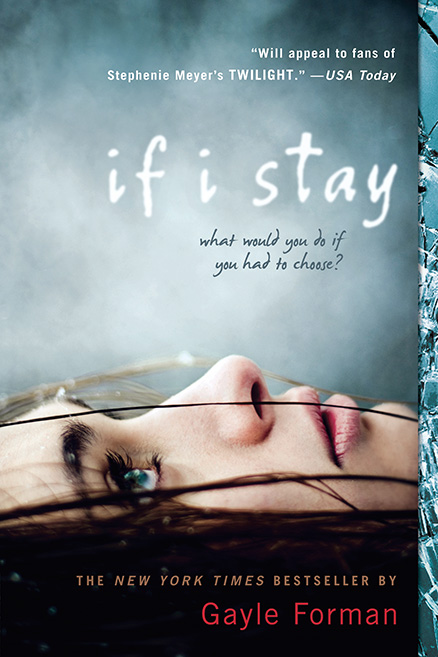
After completing the first book of the series, If I Stay by Gayle Freeman, it was very interesting for me to transition straight away into the second book, Where She Went.  The first book is all told from te first person perspective of Mia, the main character in a coma; but the second book is told from the the first person perspective of Adam, Mia's boyfriend.

In the end of the first book, it leaves off with Mia hinting at life, and never tells you whether or not she dies, but from all the hints of the book, I'm assuming she does die.  Especially when the second book starts with Adam hating his life.  When I read the first chapter of the second book, it started with Adam doing a recording in New York, which to me is extremely sad knowing that before Mia's coma, she and Adam were fighting about her wanting to leave for New York and him staying in Portland.  I think that there's a point to him going where she could only dream of going, and that makes the big connection saying that Mia is dead.

 I like how Forman switch the perspective not to someone like the grandma, but to her boyfriend.  As a teen reader, books are always more interesting from a teen perspective, especially in this case.  I'm excited to see where this book goes.  I recommend the last book, If I Stay to all.

Sunday, January 6, 2013

If I Stay by Gayle Freeman

This week, while reading If I Stay by Gayle Freeman, I focused on two of Mia's friends, and how they built a trust and friendship, based solely on their mutual drive to get to Mia, and help her.

As I've mentioned before, the story goes back and forth between present, and flashbacks in Mia's point of view.  One flashback was of Mia trying to get her boyfriend, Adam, and best friend, Kim, to become friends with each other; because they were the two most important people in her life.  If her flashback everyone got in a big fight because Kim and Adam couldn't be more different, so the story had set up a scenario of them avoiding each other, and loving Mia separately.

This chapter was really great because it showed a common goal between Kim and Adam, and how easily they could work together, and have each other's backs, when Mia was at stake. Their drive to get to Mia was never turned away.  They didn't stop until they reached their goal of Mia, and it was really cool how the author turned them against one another, just to prove that they could get over anything, to protect the one they loved, Mia.

This book has high risk circumstances, and the author does a really good job of weaving in relatable teen stories.  This example of friendship is so strong, and really shows that if you care for someone, you can overcome anything that gets in your way.

Sunday, December 16, 2012

If I Stay by Gayle Forman

The book If I Stay, by Gayle Forman is really amazingly written because it is such a deep and interesting book with such a great structure.  The author of this book does a really good job of keeping the plot intriguing, and giving a clear difference and perfect balance of past and present detail.  The book switches from Mia's life in a coma, observing what is happening in the real world, to memories of the people around her which she cares so much about, but can't communicate with currently.

I think that it is such a good job that Forman is doing because it isn't the least bit confusing of whether or not you are reading present day events, or one of Mia's memories.  The book also cleans itself up well, and really clarifies what is happening currently in Mia's mind with her flashbacks.  Because the book started pretty much with the car crash, it helps a lot to refer back to moments with each of the characters, because we, as readers, never originally got a basis of Mia's relationships, so it helps a whole lot to flip the format between memory and present interactions.  The author does a beautiful job with maintaining balance and a well written plot, and this book is really keeping my attention through every detail.

Sunday, December 9, 2012

If I Stay by Gayle Forman

I just started reading the book If I Stay by Gayle Forman this weekend, and so far it's really simple and character introductions.  The book hasn't developed at all up to this point, but the main character is extremely relatable through her interests and family conflicts and relations, even though she is seventeen years old.  Being that I just finished the first chapter, there was only one substantial excerpt that I felt had some meaning beyond introduction purposes.  It might just be a short setting opening, but when I read through it for the second time, it showed importance, and poetic development of the future plot.  The first page reads, "Everyone thinks it was because of the snow. And in a way, I suppose that’s true.  I wake up this morning to a thin blanket of white covering our front lawn. It isn’t even an inch, but in this part of Oregon a slight dusting brings everything to a standstill as the one snowplow in the county gets busy clearing the roads. It is wet water that drops from the sky—and drops and drops and drops—not the frozen kind."

I'm not sure what the "it" is in the first sentence of this paragraph, but I think her description of the snow has some foreshadowing insight within it.  I think that describing the snow as "thin" and saying "it isn't even an inch" shows small change.  I think that it is showing the lesson that even the smallest of actions can make a difference, and that even if you are just one person, you can change a lot in the world.  This also goes into the next line, "a slight dusting brings everything to a standstill."  I think this is showing the change that each action can make.  Further on in the story, I believe that Mia, the main character, will have a series of life changing/world changing actions, that may be small, yet still have a large outcome.  The repetition at the end of the paragraph sort of helps this description flow into the next idea of the book, but also shows, within the lesson that I got from this opening, how change isn't sold, or all there at first, but it slowly drips its way into the world to make a difference, even if the people around you (the snowplow) try and wipe away your change. 

This section reminds me of two quotes:
"But let justice roll on like a river, righteousness like a never-failing stream."

"A person's a person, no matter how small."